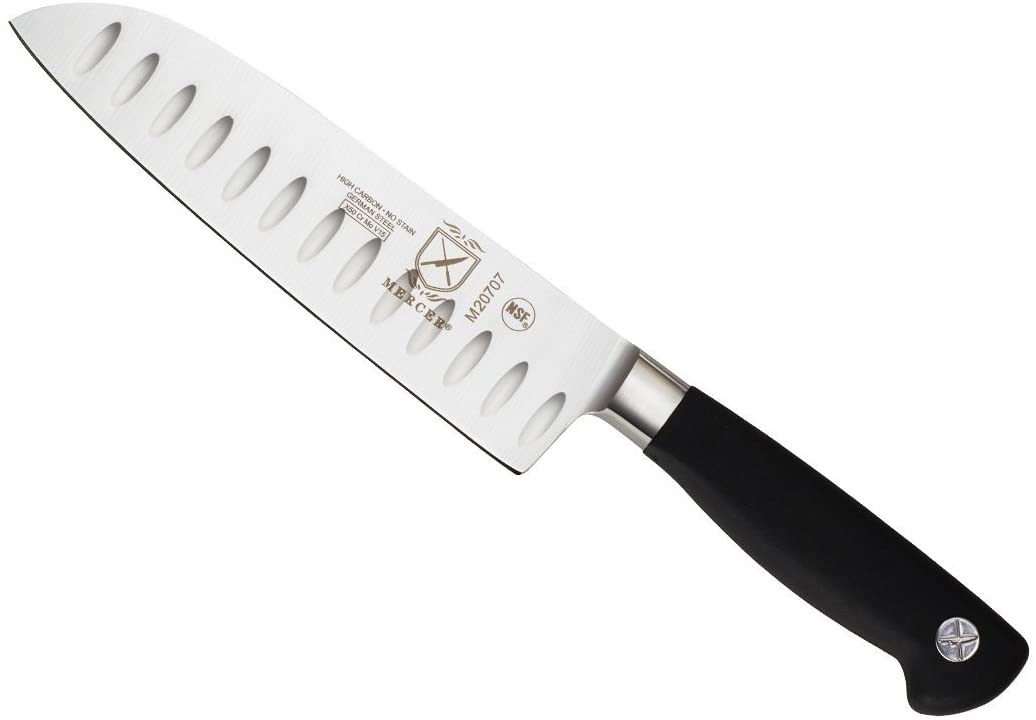
Do you need a special sharpener to sharpen a Santoku knife? If you have been worrying on how you can sharpen your Santoku knife then you need to stop that immediately after reading this article because you will have known all you need to do when you want to sharpen your Santoku knife.
In this article, we are going to discuss into detail about what you need to sharpen your Santoku knife and a detailed step to step guide on how to sharpen a Santoku knife. Hope you’ll enjoy reading this article!
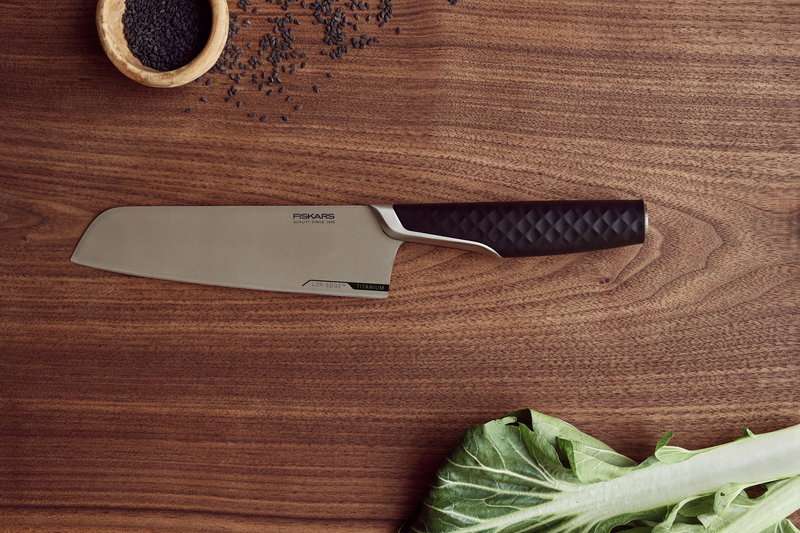
What should I use to sharpen a Santoku knife
Have you been wondering whether there is a specific sharpener that is usually used to sharpen Santoku knives? Well, this depends on the type of Santoku knife that you use.
For instance, real Japanese Santoku knives are known for having thin and straight – bottomed blades that are usually made for chopping and mincing. These knives can either have a bevel or just one edge that is known to achieve more precise cutting. These knives are known to be sharpened using a
whetstone.
Again, Santoku are also known for having a distinct, rounded edge and also a line of scallops that mainly prevents food from sticking on the blade. These blades are less curved at the bottom. If you have used these knives before, you must have noticed that these are always much thinner than the common standard knives. Being so thin, several home sharpening tools cannot sharpen Santoku knives properly. Santoku knives do have a two sided bevel making it a go for a V-shaped sharpening tool to be used.
Wusthof – Trident Santoku Sharpener
Wustholf – Trident of America decided to design a Santoku Knife – Life Sharpener after its version of the Santoku knife became the best-selling knife in its company’s records. All you should know about this sharpener is that it sharpens at a much finer angle which is 11 degrees per side when compared to other standard knife sharpeners.
Just about five slow swipes in a constant direction on the rough side, then again five more on the smooth ceramic side is enough to make a visible metal shaving on the blade of a dulled Rachael Ray or Furi Santoku type of knife. Again, when you try to cut a paper using the sharpened edge, it will not but when you try cutting a tomato skin it will be adequate. The quick sharpening rods could get old within a short while when you put it with a heavy use.
How much does Wusthof handheld santoku sharpener cost? Well, if you are interested in buying this sharpener, you will have to spend about $19.95.
How to sharpen a Santoku Knife
Now that you have known what you need to have in place for you to perfectly sharpen a Santoku knife, you should also know how the sharpening is done to enable you to adequately sharpen your Santoku knife.
These are the simple steps that you need to follow whenever you want to sharpen your Santoku knife:
- Prepare your stones
Do you want to sharpen your Santoku knife using the stones? Well, this is one of the most recommended sharpeners you need to use. Preparation of stones mainly depends on what kind of stones you intend to use. You may need to soak or not. If you prefer to use the Naniwa stones, you will only need to make them wet since they don’t need soaking. You can also use a spray bottle for this.
- Ensure your stone is flat
You need a flat stone to ensure that the angle between your knife and stone is in the same style throughout the whole length of the stone. Is your stone having a curve? If so you need to get it flattened before you begin sharpening. Can you see a slightly noticeable curve? If there is any, you need to find a professional to flatten it. When all these are done, maintaining a flat stone will be easy.
- Choose your angle
This is usually between 15 to 20 degrees. Most of the Japanese knives are always about 15 degrees while the European ones are always about 20 degrees. You will notice when your angle is too low because you will not make so much progress within a few strokes.
- Holding the knife and Stroke
One of your hands should always hold the knife handle whenever you hold the knife at your preferred angle. The other hand and fingers should be holding the stone. You should also ensure that your wrists are straight. The sharpening stroke is the process when the knife moves from the edge.
For instance, when the edge is facing you, you need to push into the blades as you push the blade away and ensure that you let go of the pressure whenever you pull the blade back to you.
You need to ensure that you are maintaining the same angle on each of the strokes you make and try to use the whole stone. This is to prevent other sides of the stone from wearing off more quickly and it also compromises your angle.
- Sharpening
Here, you need to begin with the roughest stone. Choose a side and for instance, the edge facing you. You should also begin with the tips of the knife. Since the tips are usually curved, your hand positions need to change slightly. When you are done with the tip, you need to move down to the edge and also make some few strokes. You need to do this until you are through with the edge and sprinkling water as required.
Proceed by picking the knife and just on the left side that is not being sharpened, run your finger or even your thumb on the flat present on the knife starting from the spine to the edge. When doing this, you need to feel a burr. When you can’t feel the burr throughout the edge, then that side isn’t done or it needs more sharpening.
- Finalizing
Get your final stone and complete both sides, ensure you get rid of the burr. You can do this by holding the knife in the previous angle you’ve been using and the burr side touching the stone and then proceed by pulling the edge of the knife on it to get rid of the burr.
- Re – flatten your stone
Now that your knife is sharp, the only step left is to flatten your stone. For this case, you can either use a flattening stone or even a very fine sandpaper. This will only require a few strokes and ensure that you wet the sand paper.
Last Words
For you to perfectly sharpen your Santoku knife, you only need to strictly follow the above steps. Good luck!